Don’t get me wrong, travelling is still an exciting experience and an aesthetically enriching part of life. I have travelled to 13 countries and more than 20 cities over the past eight years. However, travelling solely for the sake of taking photos to later flex in front of your friends is one of the least interesting things you can do. In fact, having the opportunity to visit different countries can help you grow in many meaningful ways.
Life Is Beautiful, Isn’t It?
The Misery of Repetition
The most obvious benefit of travelling somewhere different from your city is that it lets you rediscover how beautiful this world truly is. Some may argue that the world is unfair, cruel, or cold-hearted. Fair enough, I agree, this world is no Garden of Eden, and you will encounter inequality, imperfection, and disappointment from time to time. But you cannot let one bad apple ruin the whole basket. When was the last time you felt exhausted and tried to escape your hectic reality by travelling to an unfamiliar city? Do you remember how the wind seemed to wash away your worries, how a local dish tasted, or how the scent of a wheat field lifted your spirits? Sometimes, people feel miserable simply because they are trapped in the repetition of an ordinary, predictable life. You wake up at eight in the morning, hastily eat the same breakfast you’ve had for three days straight, rush off to school or work, and after hours of labour, return home, cook dinner, prep meals for the next two days, maybe watch an episode of Money Heist, and then go to bed. And during the most stressful periods of the year, you have to put in extra hours for upcoming exams or unmet KPIs. That’s why, for many, travel becomes a form of salvation from this relentless daily grind.
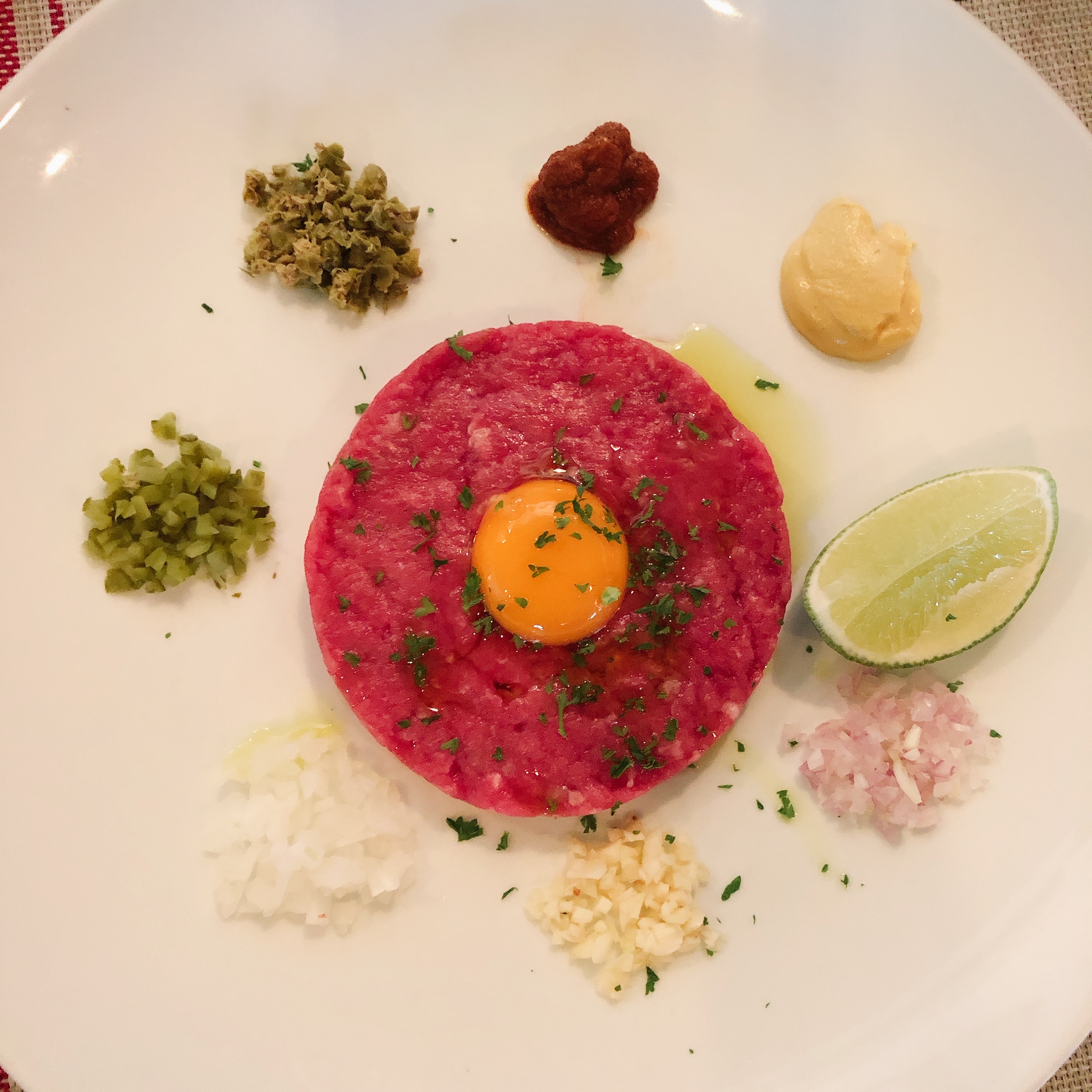
A Delicious Tartare de Bœuf
It’s Not the Place, It’s Your Eyes
Some say that travelling is simply leaving your boring city to visit another boring city, where you feel excited about things that seem perfectly ordinary to the locals. That’s technically true. If you live in Barcelona and pass by the Sagrada Família every day on your way to work, you’ll eventually see it as just another cathedral. But if you’re a tourist visiting Barcelona for the first time, you’ll find it breathtakingly enormous, marveling at the century of work behind such a magnificent architecture. Sometimes, life is just as beautiful as it has always been, but you’ve lost the excitement simply because the novelty has worn off. A tulip in Amsterdam doesn’t have a more delicate scent than the one in your garden. A cappuccino in Venice doesn’t taste more authentic than the one from your local coffee shop. You only feel excited because of the unfamiliarity. If you take a different route home instead of your usual commute, walk along a river you’ve barely noticed, and pay close attention to every flower and every blade of grass along the way, you might find that your hometown is just as beautiful as anywhere else on earth. That was the lesson my third country taught me: the Char Koay Kak I savored in Penang wasn’t so different, after all, from the Bot Chien waiting for me back home.

George Town, Penang, from above
Respect The Differences
There Are More Than One Size and Shape
People usually fall for familiarity, and hence anything outside their comfort zone becomes… somewhat disgusting, dangerous, or perhaps unbearable. You’ll see what I mean once we talk about food, one of the most universal topics in the world. Imagine telling an American that Mettbrötchen is the most delicious food on earth. The moment that person looks it up online, he’ll either throw up or give you a deeply concerning side-eye. Some may argue German cuisine simply isn’t that popular (sorry, my lovely German friends), so let’s talk about France instead. Ask a random Chinese person to blindly taste a piece of Blue Cheese, and he’ll insult the entirety of French cuisine on the spot. And it’s not just food, you’ll find these clashes in every corner of travel. An American will complain “there are too many stairs here” or “there ain’t no car” while wandering Venice. A German might yell “die Treppe ist nicht genormt” upon encountering an oddly-sized staircase in Brazil. An Italian could have a full meltdown discovering Chicago deep-dish pizza exists. A Malaysian Muslim will politely ask you to leave if you wear shoes into a mosque, while an Italian Catholic will kick you out with an angry hand gesture if you walk into a church in shorts, talking loudly. The moment you step away from your day-to-day comfortable life, stop hearing your mother tongue, stop seeing familiar faces, and stop recognizing the culture, architecture, or geography around you, inconvenience and discomfort seem to be waiting around every corner. You’ll witness people behaving differently, following different social norms, holding different values, and reacting in wildly different ways to the very same situation.
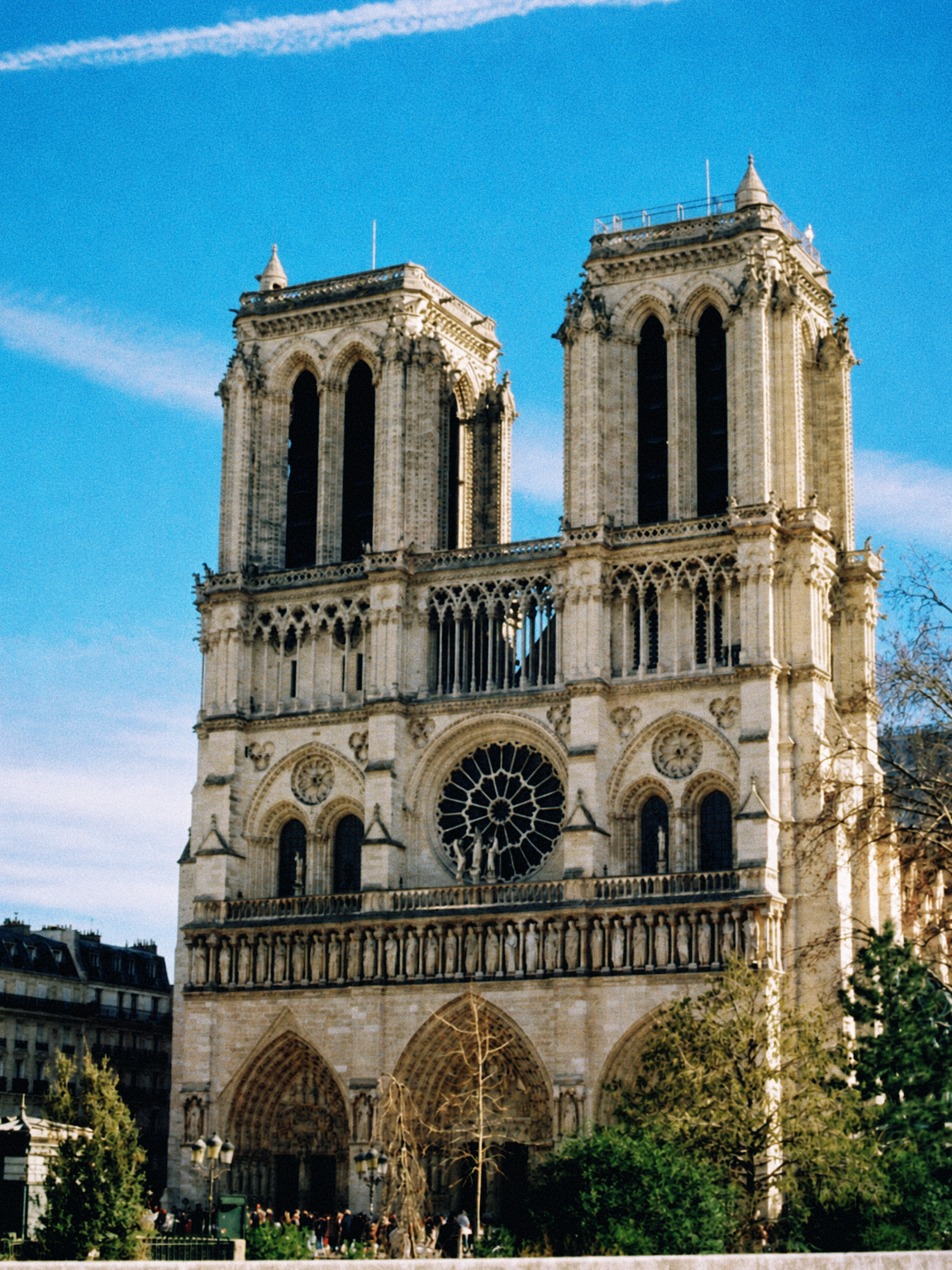
The famous Notre-Dame in Paris
However, differences and unfamiliarity don’t always translate into discomfort and irritation. While strolling along the Seine in the heart of Paris, you might find yourself falling in love with the buildings lining its banks. Tasting a gelato in Florence, you may swear it’s the most delicious dessert you’ve ever had. Watching the sun dip into the horizon on a beach in Pattaya, you might wonder why you didn’t visit Thailand sooner. In every journey, there’s almost always at least one pleasant surprise waiting, be it a warm-hearted local, a mouthwatering dish, a breathtaking cathedral, or a thrilling mountain trail. And perhaps that’s the real magic of travel: it doesn’t just show you how different the world can be, it reminds you how easy it is to fall in love with something you never expected to.
There’s No Universal Rulebook
Once you’ve witnessed enough of these clashes, food, customs, gestures, you begin to realize something rather liberating: there is no universal rulebook for how life should be lived. What feels rude in Hong Kong might be completely normal in Germany. What feels disgusting to a French palate might be a Sunday delicacy in China. Even something as simple as eye contact, the volume of your voice, or how close you stand to a stranger carries entirely different meanings depending on where you are standing. Swedish people, for instance, are perfectly comfortable keeping a full meter of personal space in public, a distance that might feel oddly cold anywhere else. The mistake most people make is assuming their own culture is the default setting of humanity, and everything else is merely a deviation from it. But the truth is, every culture is simply a different answer to the same question: how should people navigate life given their geography, climate, natural resources, neighbouring countries, and regional tensions? Different combinations of these factors produce a different “recipe” for living. Consequently, there isn’t a “correct” version of that recipe, only different ones, each shaped by centuries of history, religion, and circumstance. Once you accept this, something shifts. You stop measuring other cultures against your own, and instead start asking, “why does this make sense to them?” That single question, more than any guidebook or itinerary, is what turns a tourist into a traveller.
Travel Is a Crash Course in Patience
Missed Trains and Broken Plans
Ask a German or Italian how it feels when the announcer at the train station casually informs everyone that the train is delayed by another 45 minutes, or worse, cancelled entirely. Ask an American how it feels being stuck in a two-hour traffic jam in uptown Manhattan. There was one time I was almost stranded in Rottweil on my way back from Basel. Luckily, I was rescued by a lovely Schwäbisch guy whose mom happened to be picking him up. But I’ve also slept at Ulm train station after the last train got cancelled, and at Penang airport after missing my flight. You see, life is full of unexpected turns you simply cannot plan for. Normally, when your schedule starts derailing from your original plan (if you even had one), you’ll feel upset, irritated, maybe even a little defeated. Some people crash out entirely, giving up on the trip altogether and heading straight back home. I still remember travelling to Titisee with friends when Deutsche Bahn generously handed us a 25-minute delay, forcing us to catch a train an hour later instead. Right there, in the middle of the journey, four people in our group gave up and took the next train back to our town.
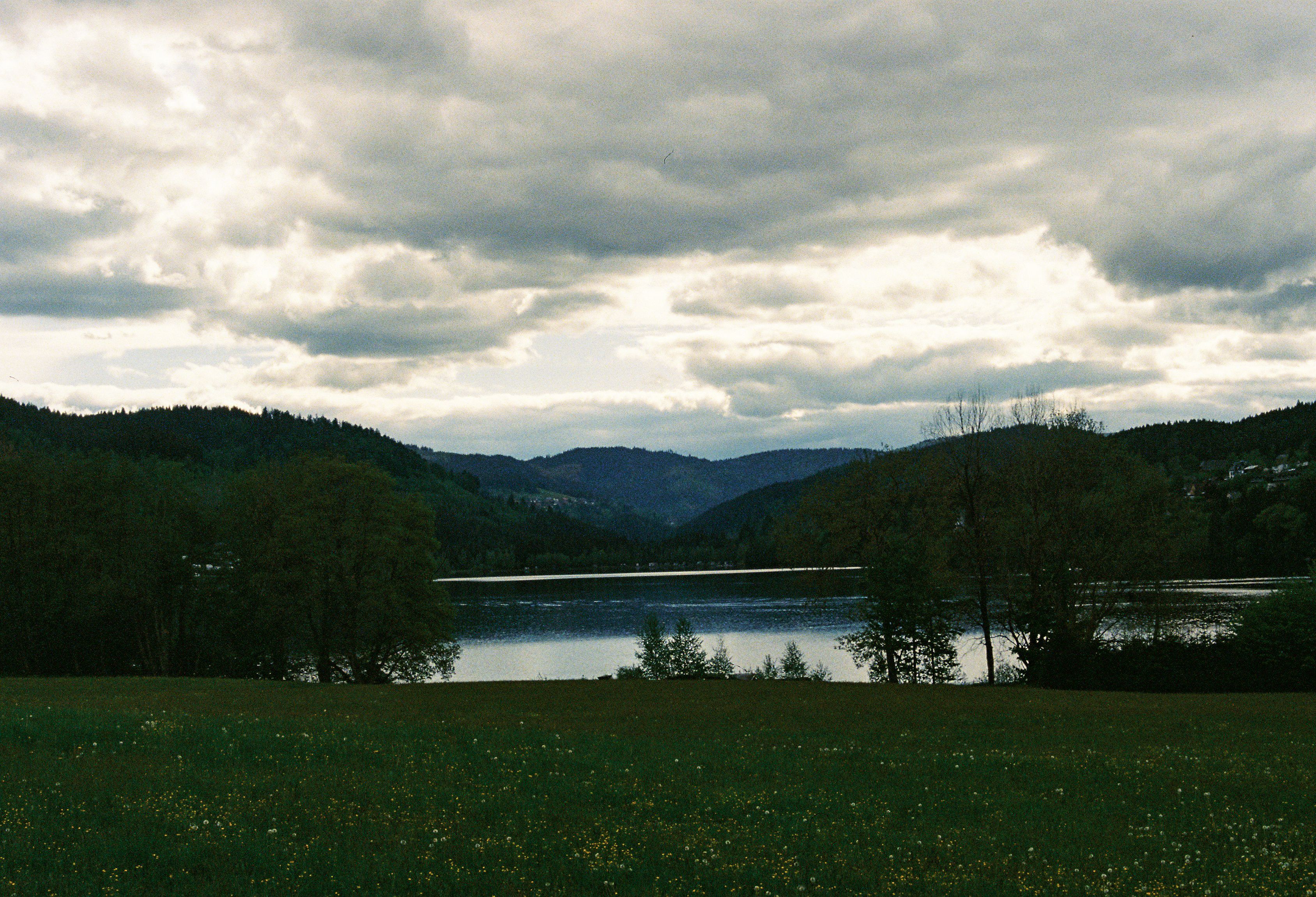
The quite and peaceful Titisee in Germany
People react radically differently to the same setback, and not everyone carries the same tolerance for disruption, at least, not at first. That’s the thing about travelling frequently: the more you move through unfamiliar places, the more often you collide with the unexpected. Missed connections, sudden cancellations, language barriers at the worst possible moment, they stop being rare inconveniences and start becoming a regular part of the experience. And slowly, without you even noticing, your threshold for frustration begins to shift. What once felt like a crisis (a cancelled train, a missed flight, a night spent on a cold airport bench) starts to feel like just another Tuesday. Travel doesn’t make life more predictable, it simply trains you to expect the unpredictable, and that, more than any itinerary, is the real souvenir you bring home.
The Art of Going With the Flow
Travelling isn’t always about the fun, the nice photos, or the delicious dishes. It’s also about embracing challenges and the unexpected. Sometimes that unexpected turn leads you to a quieter, more interesting corner of the city, introduces you to people you’d never have met on schedule, and teaches you to admire the randomness of life. Not all disturbances are bad. Deviating from the predictable path may sound scary at first, but it’s exactly what builds a stronger tolerance for uncertainty.
I remember one time in Milan when I couldn’t get tickets for the Duomo. Rather than sulking about it, I simply changed my plan and hopped on a tram toward Castello Sforzesco after wandering around the cathedral for a while. That tram ride is still a vivid memory, watching the city glide by from inside a century-old carriage felt like travelling back in time. Near the castle, tucked away in an unassuming corner, I stumbled upon a tiny Chinese restaurant (I’m sorry, I was a broke student at the time) serving fried rice for just 4 euros, quite possibly one of the best deals of my entire trip. And just when I thought the detour couldn’t get any better, I wandered into a lovely little alley on the way to Pinacoteca di Brera, one I never would have found had my original plan gone smoothly.
In the end, travel doesn’t just test your patience, it rewires it. Every delay survived and every wrong turn embraced adds up, until disruption stops feeling like a threat and starts feeling like part of the adventure. And maybe that’s the real transformation: not becoming someone who avoids the unexpected, but someone who’s learned to enjoy it.
Collect Stories, Not Stamps
So no, travelling isn’t really about the number of countries stamped on your passport, or the photos you post to prove you were “there.” If that’s all you’re chasing, you’ll come home with a full camera roll and an empty lesson learned. The real value of travel lies somewhere quieter: in learning to see beauty in the ordinary again, in realizing your way of life is just one of countless “recipes” humans have written for how to live, and in discovering that you’re far more capable of handling chaos than you ever gave yourself credit for.
Thirteen countries and twentyish cities later, I’ve stopped counting. What I remember instead are the tram rides through unfamiliar streets, the arguments over Blue Cheese and Mettbrötchen, the nights spent stranded at train stations that somehow turned into stories worth telling. None of that fits neatly into a highlight reel, but all of it made me who I am today, a little more patient, a little more curious, and a lot less impressed by people who just want to brag about their passport stamps.
So the next time someone asks how many countries you’ve visited, maybe don’t answer with a number. Answer with a story.